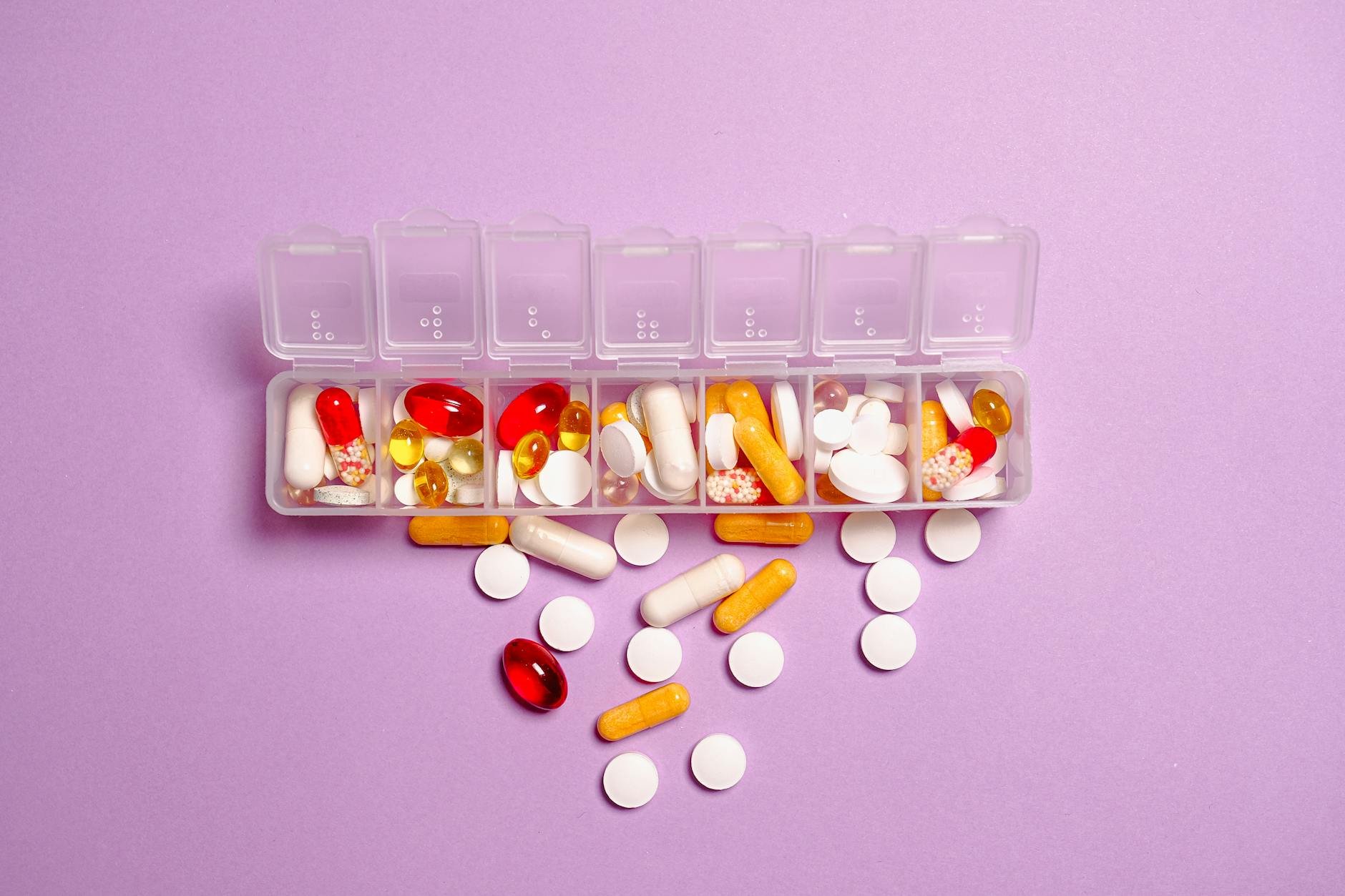
Placebos are not supposed to do anything, yet they kind of work. Well, then why not sell them at a high price like real medicine? Turns out, maybe that’s not such a bad question. Lu and Tirth discuss three priceless studies about expensive placebos on S01E11 of the Recreational Science podcast (timecode 5:38):
Lu: Today, I want to discuss the placebo effect. I think everybody knows what the placebo effect is. It’s when an inert drug, like a sugar pill, has an effect, like it helps you feel better or whatever.
Tirth: Often because there’s an expectation from the person taking it, that this thing will help them.
Lu: That’s what I was going to ask. What accounts for the placebo effect?
Tirth: I think that’s a big factor, that there’s this so-called “buy-in.”
Lu: It’s like a psychological thing.
Tirth: Yeah, I think that’s probably a huge part of it.
Lu: I think another part of it is sometimes placebos can have an actual physiological effect.
Tirth: Makes sense too.
Lu: For instance, if you use an anti-itch ointment that’s a placebo, so it doesn’t actually do anything, sometimes that can lead the nerves that causes the itch to fire less. It’s a psycho-physiological thing.
Tirth: Right.
Lu: The study I’m presenting today, Tirth, shows that expensive placebos work better.
Tirth: Oh, wow. Okay, so let’s unpack this. There are multiple layers here, right? Because there’s a whole separate phenomenon where people assume that things that are priced higher are better quality.
Lu: Exactly. So that’s one of the rationale behind the studies I’m presenting. I’m actually presenting three studies today. I did a deep dive on this subject. The first study is titled “Commercial Features of Placebo and Therapeutic Efficacy.” This was published in the Journal of American Medical Association, JAMA.
Tirth: Great journal.
Lu: Good journal. This is a double-blinded randomized control trial. The researchers recruited 82 healthy volunteers. They paid them $30 and then delivered electric shocks to their wrist at different voltages, ranging from not that painful to pretty painful.
Tirth: Oh my god. Basically tased them.
Lu: And the volunteers rated the pain. The researchers then gave them this placebo and told them it’s an analgesic, an opioid. After they took this placebo, they were shocked again at the same voltages and asked to rate the pain a second time. The 82 volunteers were divided into two groups. One group was told that this drug, this new opioid analgesic drug, is very cheap: 10 cents a pill. The other group were told that this is an expensive drug and costs $2.50 per pill. What do you think they found?
Tirth: They found that the group that got the $2.50 pill – they’re the same pill?
Lu: Yeah, they’re the same pill and they’re both placebo pills. They’re not even pain killers.
Tirth: I think the $2.50 group rated their post-pill pain as lower than the group that got the 10 cent pill.
Lu: Yes. Both placebos actually worked to reduce the pain rating. Even the 10 cent one.
Tirth: Wow.
Lu: But I think that’s sort of a psychological phenomenon, which is the volunteers want to be good drug trial participants. If they think the researchers running the trial are trying to find that their drug is good, they want to produce results. They want to be helpful.
Tirth: Right.
Lu: So I think that’s part of it. But also, the more expensive placebo outperformed the cheaper drug at almost all of the different voltages the volunteers were shocked at. The p-value is less than .001.
Tirth: Wow. Okay. Pretty strong effect.
Lu: But the outcome they’re measuring is very subjective, right? It’s just, “hey, rate the pain.”
Tirth: I mean, pain scales are very subjective.
Lu: So here is the second study, which is called “Placebo Effect of Medication Cost in Parkinson Disease: a randomized double blind study.” This was published in the journal Neurology. Is that a good journal?
Tirth: Yes. It’s called the “green journal,” because its cover is green.
Lu: I’ll take your word for it. Here, they got 12 patients with Parkinson’s disease.
Tirth: That’s it? 12 patients?
Lu: Uh-huh. For our audience who don’t know, what is sort of the main defect in Parkinson’s disease?
Tirth: Parkinson’s is what we call a movement disorder. So patients get this resting tremor. They have this rigidity and stiffness in their arms, hands and legs. When they’re walking, they kind of shuffle. Their face looks like it’s kind of frozen.
Lu: What is the general mechanism?
Tirth: The general mechanism is loss of a chemical called dopamine in the brain.
Lu: So the main treatment, one of the main treatments, for this disease is actually giving people dopamine.
Tirth: Which hasn’t changed, by the way, in like 50 years, like the formulation Carbidopa-Levodopa came out in the 1970s.
Lu: So, in this study, they gave the 12 Parkinson’s patients the same placebo, which the patients were told was a novel subcutaneous injectable dopamine agonist. Now, half the patients were told that this drug is very cheap. The other half were told that it’s very expensive. And then they assessed the patient’s motor function afterwards. So, not subjective, self reported ratings like the first study, but more objective measurements of motor function by the researchers. So what do you think they found?
Tirth: Sensing a trend, I’m sure they found that the patients who thought they were injecting the more expensive drug performed better.
Lu: They did. There was measurable improvement in motor function. Like the first study, both sets of patients, the cheap and expensive placebo groups, showed improvement in motor function. However, the improvement was much higher in the expensive placebo group. The effect size of the expensive placebo was about halfway between that of the cheap placebo and the standard Carbidopa-Levodopa drug.
Tirth: Wow.
Lu: So not bad at all. Not bad at all.
Tirth: Nice.
Lu: The third study is called “Expensive seems better: the price of a non-effective drug modulates its perceived efficacy.” This is from the journal Cognitive Research: Principles and Implications.
Tirth: Great journal.
Lu: Very good journal. So here, they kind of flipped the method on its head. They got 56 healthy volunteers. These were Spanish internet users. These participants, the Spanish internet users, were not given the placebo drugs.
Tirth: Okay.
Lu: Instead, they were given patient charts. Fifty patient charts each to review. The fake patients in these charts were given the placebos to treat their fictitious disease, which they call crises of “Lindsay Syndrome.”
Tirth: That’s just like a playbook straight out of Seinfeld or Curb…
Lu: Crises of Lindsay Syndrome. What do you think that is?
Tirth: How do you spell it?
Lu: L-I-N-D-S-A-Y.
Tirth: Oh, like Lindsay Lohan.
Lu: Lindsay Lohan.
Tirth: I like to imagine it’s a horrible liver disease. Like your liver like basically explodes.
Lu: Wow.
Tirth: That’s why it’s a crisis.
Lu: I think it’s like a fungal disease. During the crisis, it’s…
Tirth: …It’s all over the place. The fungus is everywhere.
Lu: Yeah. Or it’s like you get a lot of freckles, which I think Lindsay Lohan would have. You get a bloom of freckles. There are freckles everywhere.
Tirth: Afflicted by the Lindsay syndrome.
Lu: The crisis of Lindsay syndrome. So the 50 fake patients suffered from the crisis of Lindsay syndrome. And 25 of these patients took a fictitious drug called Batatrim.
Tirth: Half of them.
Lu: Half of them. And regardless of whether or not they received Batatrim, 70% of them got better. So statistically the drug doesn’t have an effect.
Tirth: Okay.
Lu: Of the 56 volunteers they got to review these patient charts, half of them were told that the drug is expensive. The other half were told that the drug Batatrim is cheap. And they were asked to evaluate whether they think this drug is effective and whether they would administer it in the future.
Tirth: Well, in keeping with the theme, I’m guessing the group that was told that this fake drug was more expensive probably thought that it was more effective.
Lu: Yes. Yes, they thought it was very, very effective and were more willing to administer it in the future.
Tirth: In the pocket of a big pharma, fake big pharma.
Lu: So what is the take home point here? What is the relevance to society? Well, I think, you know the guy, Pharma Bro? What was his name?
Tirth: Martin Shkreli.
Lu: What did he do? He bought like an insulin producing company and jacked up the price?
Tirth: No, it was an anti-parasitic that’s incredibly cheap in Asia, but it’s not available in America because we don’t have that many parasitic diseases. He bought the license to it.
Lu: And he jacked up the price?
Tirth: Yeah, like by a hundred times or something.
Lu: Here’s my take: I think this guy is a hero. I think this guy was trying to make the drug more effective by making it more expensive. I think instead of being thrown…is he in prison?
Tirth: No, no, he’s been out for a while.
Lu: Okay. Well, that’s…
Tirth: He’s actually pretty active on Twitter.
Lu: Okay. Good. Well, I think he should never have been thrown in jail. I think he should have received the Nobel Peace Prize.
Tirth: He’s an American Hero.
Lu: And the Physiology and Medicine Prize.
Tirth: And Economics, maybe.
Lu: And the Economics Prize. Exactly. All three of those.
Tirth: Yeah.
Lu: Chemistry as well. Throw that on there.
Tirth: Sure.
Lu: Physics…? We’ll see.
Tirth: We’ll see. Need more evidence.
Article citation
Waber et al., 2008. Commercial features of placebo and therapeutic efficacy. Journal of the American Medical Association. https://jamanetwork.com/journals/jama/article-abstract/181562
Espay et al., 2015. Placebo effect of medication cost in Parkinson disease: a randomized double-blind study. Neurology. https://www.neurology.org/doi/10.1212/WNL.0000000000001282
Diaz-Lago et al., 2023. Expensive seems better: The price of a non-effective drug modulates its perceived efficacy. Cognitive Research: Principles and Implications. https://cognitiveresearchjournal.springeropen.com/articles/10.1186/s41235-023-00463-4



Leave a Reply